
American Roach and Drain-Line Control in Phoenix, AZ
- Pest Control Service in Phoenix
- Bark Scorpion Control
- Scorpion Exclusion and Sealing
- Subterranean Termite Treatment
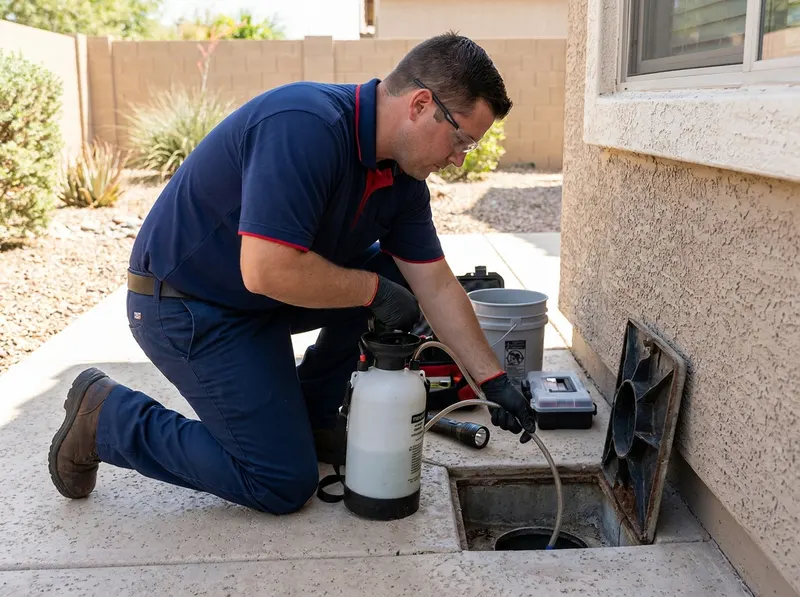
- What's included: inspection of every floor drain, sink trap, laundry standpipe and cleanout in the home, drain-line treatment with a labeled foaming product that clings to the pipe wall, exterior treatment of valve boxes, water meter box, hose bibs and door thresholds, and a written record of what was found and treated.
- How fast: an initial American roach visit in Phoenix typically takes 60 to 90 minutes, and sightings usually drop within 3 to 14 days — a cracked sewer lateral or an uncapped cleanout will keep producing roaches until the plumbing itself is repaired.
- What it costs: initial American roach and drain-line service in Phoenix generally runs $250 to $475 depending on home size and drain count; the minimum charge is $250, and the exact price is confirmed at a free on-site visit.
- What we take: American cockroaches, Oriental cockroaches, and the drain flies that share the same lines; German roaches breeding inside kitchen cabinets are a different problem handled on a separate service page.
- How to book: call (520) 677-4082 to schedule an on-site inspection in Phoenix or anywhere in Maricopa County, and mention which drains or rooms the roaches appear near.
American roaches are big — an inch and a half or more — and they show up alone rather than in clusters: one in the guest shower, one in the garage, one skittering across the laundry room floor at night. That pattern matters. **A single large roach in a dry room almost always means a travel route, not an indoor infestation.** The routes in Phoenix homes are predictable: a dried-out P-trap in a bathroom nobody uses, a garage or laundry floor drain, a poorly sealed washing machine standpipe, an open sewer cleanout in the side yard, or the gap under a garage door that faces a wet irrigation valve box. We inspect those points first and treat what we find, because spraying the kitchen baseboards does nothing to a roach living in a sewer line.
Neighborhood age changes the diagnosis. In the Willo Historic District, Coronado Historic District and Encanto-Palmcroft, older clay and cast-iron laterals develop joint separations, and those homes also sit on flood-irrigated lots where standing water in the front yard creates weeks of surface harborage after each turn — same story on the irrigated blocks of Arcadia and parts of Laveen near the canal laterals. Maryvale and Sunnyslope slab homes often have an original garage floor drain that has been dry for years and functions as an open pipe into the sewer. In newer Desert Ridge and Deer Valley builds, the usual culprit is a guest bathroom or pool bath that goes months without use, so the trap seal evaporates in the dry heat and the roaches simply walk up. Ahwatukee Foothills homes backing the block walls near South Mountain Park and Preserve get a second pressure source: drip emitters and landscape lighting boxes holding moisture right against the foundation. Monsoon storms make all of it worse — **storm-drain and catch-basin populations get flushed and disperse into surrounding yards after heavy rain**, which is why late July and August sightings spike in homes that were quiet all spring.
On decision-fit: if you are seeing one or two large roaches a week and nothing in food cabinets, a targeted drain and exterior service is the right call and often resolves it without any interior residual at all. If you are seeing small tan roaches with two dark stripes near the coffee maker, that is German roach work — different biology, different treatment, and the drain program will not solve it. Between the two options here, a **one-time drain and perimeter service fits a clear, single entry point**, while recurring service fits flood-irrigated lots, older sewer systems, homes near the Rio Salado Habitat Restoration Area or Papago Park green corridors, and rentals where you cannot control whether traps stay wet. The honest trade-off: one-time service costs less and stops the current pressure, but it does not stop new roaches from re-entering an irrigated yard next month.
We publish the limits, too. **Drain foaming treats the pipe wall, not a broken pipe** — if the camera-worthy signs are there (sewer odor, slow drains in multiple fixtures, roaches from a single fixture only), the next step is a plumber's scope, and we will say so in writing rather than sell you another visit. Products are applied per label, kept inside drain lines and along exterior hard surfaces, and we will walk your yard first if you have dogs or raised vegetable beds so nothing goes where you do not want it. **Every drain treated and every entry point found is documented on the service record** so you know exactly what changed. Scorpions out, roaches out, and the paperwork to prove what was done.
Call (520) 677-4082American Roach and Drain-Line Control pricing in Phoenix
| Initial American roach and drain-line service, standard Phoenix single-family home | $250 – $375 |
| Larger or multi-bath home (5+ drains, garage and laundry drains, side-yard cleanout) | $325 – $475 |
| Flood-irrigated lot add-on (valve boxes, meter box, wet perimeter treatment) | $250 – $350 |
| Recurring drain and perimeter service, per visit (bi-monthly or seasonal) | $250 – $300 |
| Duplex or small rental property, per building | $400 – $650 |
| Follow-up inspection and documentation for a persistent single-fixture issue | $250 – $300 |
Exact price confirmed free on-site before any work.
American Roach and Drain-Line Control — questions, answered
Why do I only see one large roach at a time in my Phoenix house?
One large roach at a time in a Phoenix home is the classic American roach pattern — they breed outdoors or in sewer lines and enter individually through dry traps, floor drains, cleanouts and door gaps rather than nesting in your kitchen. The fix is finding the entry route, not spraying more interior surfaces.