
Roof Rat Control and Exclusion in Phoenix, AZ
- Pest Control Service in Phoenix
- Bark Scorpion Control
- Scorpion Exclusion and Sealing
- Subterranean Termite Treatment
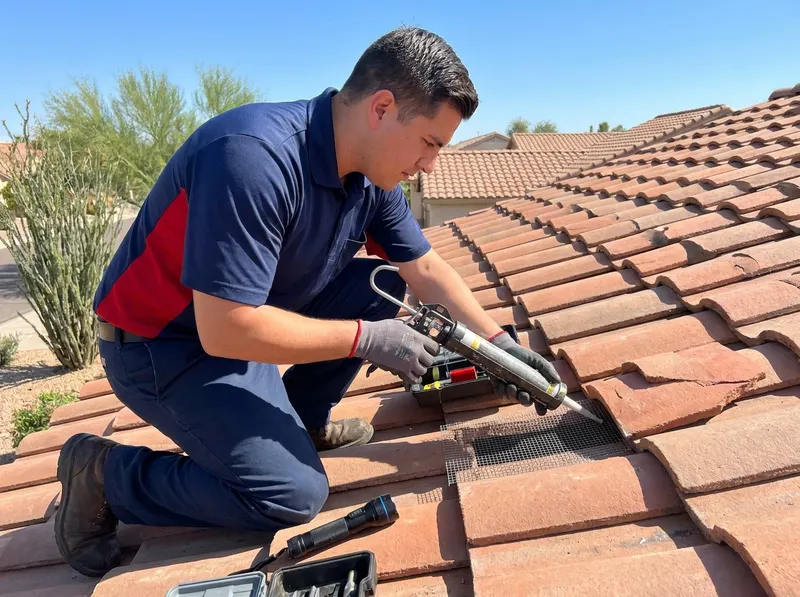
- What's included: a full attic and roofline inspection, snap-trap placement in the attic, garage and other enclosed voids, follow-up service visits, and a written, photo-documented list of every entry point found.
- How fast: inspections are usually scheduled within the same week, and most Phoenix roof rat trapping programs run two to four weeks with visits every five to ten days until the traps stay empty.
- What it costs: $250 is the minimum charge; most trapping programs land between $250 and $900, and roofline or attic exclusion work generally runs $500 to $4,500 depending on eave length, roof type and how many penetrations need sealing. These are ballparks — the exact price is confirmed on-site.
- What we take: roof rats in attics, wall voids, garages, sheds, water heater closets, Mexican fan palm skirts and citrus canopies. Roof repair, re-roofing and tree trimming are separate trades, and we will tell you plainly which parts of the job belong to them.
- How to book: call (520) 677-4082 and describe what you're hearing or seeing — night scratching overhead, hollowed-out citrus on the tree, droppings on the water heater platform — and we'll schedule a free on-site inspection and quote.
Trapping-only makes sense when the problem is new and contained: one or two rats in a garage, a rental turnover with a deadline, or a homeowner who wants the attic quiet now and the sealing work scheduled for next month. The trade-off is honest and worth saying out loud — <strong>trapping without exclusion is a reset, not a fix</strong>. The gap that let the first rats in is still open, and in an irrigated Phoenix yard with fruit and cover, something will find it again. Full exclusion costs more up front and takes longer, because it means hardware cloth on gable and roof vents, sheet metal or mortar at plumbing and conduit penetrations, and rodent blockers at the open ends of barrel tile along the eave. It is the version that ends the cycle. Most homeowners choose trapping and inspection first, then exclusion once they can see the photographed list of entry points and decide what to seal and in what order.
The neighborhood matters more than the square footage. In <strong>Arcadia</strong>, flood-irrigated lots with mature grapefruit, orange and olive canopies touching the fascia give roof rats food, water and a ladder in one place, and the Arizona Canal corridor keeps pressure steady from yard to yard. <strong>Willo Historic District, Encanto-Palmcroft and Coronado Historic District</strong> add older wood-frame construction, deep attics with knee walls, detached garages and alley utility lines that rats walk like a sidewalk. <strong>Sunnyslope</strong> homes near the North Mountain slopes bring rock squirrels and desert rodents into the same conversation, so identification comes first — the droppings, gnaw pattern and rub marks tell us whether we're dealing with roof rats or something that calls for a different approach entirely. In <strong>Desert Ridge, Deer Valley and Ahwatukee Foothills</strong>, the newer tile roofs are usually tight everywhere except the eave line and gable vents, which is why exclusion there is often narrower and cheaper than a 1940s central-Phoenix bungalow. <strong>Maryvale and Laveen</strong> tend to combine irrigated turf, block-wall runs and shed clutter, so the outdoor half of the work matters as much as the attic.
On safety and bait: we favor enclosed, mechanical trapping inside attics and garages rather than scattering rodenticide blocks overhead. A rat that eats bait and dies inside a wall void becomes an odor problem and a fly problem for weeks, and loose bait in an accessible space is a risk we don't need to take around dogs, kids or a backyard vegetable bed. Where exterior rodent control is appropriate, it goes in tamper-resistant stations, secured, and it is discussed with you before anything is placed. <strong>Every visit is documented</strong> — trap locations, catches, and the entry points still open — so you can see progress instead of taking our word for it. And no, one visit will not clear an established roof rat population; a breeding group in a citrus canopy and attic needs repeat trapping and a sealed roofline. You are not required to sign a long-term agreement to get a roof rat problem handled, though ongoing exterior service is a re
Call (520) 677-4082